

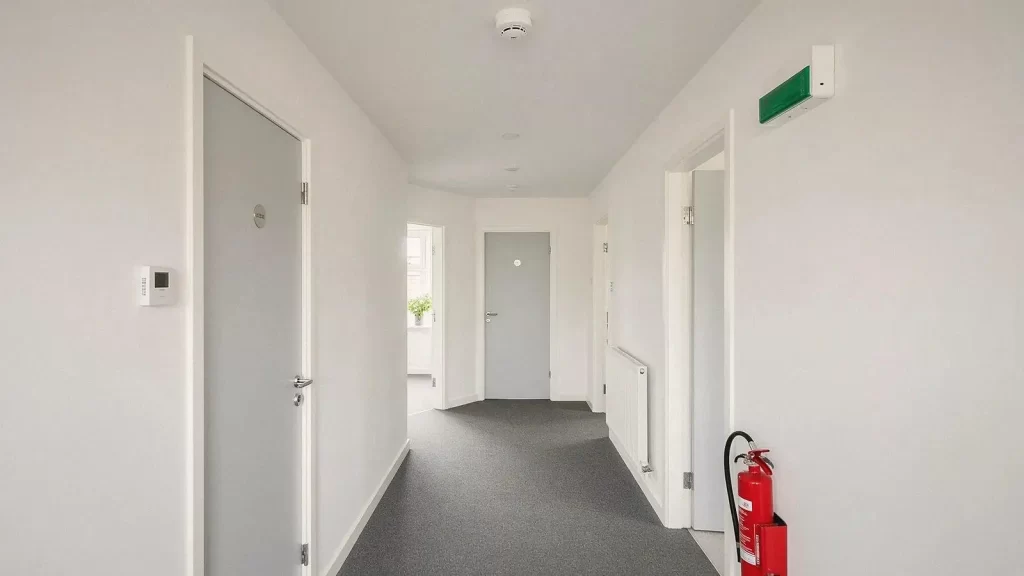
When a council inspects a shared house, fire safety is one of the first things it looks at. It is also one of the easiest areas to get caught out on, because a blocked hallway or a missing certificate can be enough for a fine. The good news is that most of it comes down to a few simple checks!
What fire safety does an HMO need?
Every rented home in England must have:
- a working smoke alarm on every floor that has a living space
- a carbon monoxide alarm in any room with a fixed boiler, fire or stove (gas cookers are not included)
- alarms checked and working on the first day of every new tenancy
An HMO usually needs more than this. Most councils expect linked fire alarms, fire doors to kitchens and bedrooms, and a fire risk assessment for the shared areas. If your HMO is licensed, your licence conditions will set out exactly what is needed.
Which safety certificates do I need?
- Gas safety: a check by a Gas Safe registered engineer every 12 months, with a copy given to your tenants
- Electrical safety: an electrical inspection at least every five years, with a copy given to your tenants within 28 days
- Fire risk assessment: a written assessment of the shared areas, kept up to date
What do HMO managers have to do day to day?
The rules for managing an HMO say you must keep escape routes clear and in good repair, keep fire alarms and fire fighting equipment working, and display your contact details somewhere tenants can see them. Bikes, bins and furniture in hallways are a common reason for a council to take action.
What happens if the council finds a problem?
The council can fine you up to £40,000 for each breach, without going to court, or prosecute you. Each problem can be fined separately, so one inspection can lead to several fines. Tenants may also be able to claim back rent.
A quick checklist
- Test the alarms and keep a simple record of when you did it.
- Walk the escape route from the top floor to the front door. Is it clear?
- Check your certificates are in date and that tenants have copies.
- Read your licence conditions again, if your property is licensed.
- Get advice straight away if the council writes to you.
How we can help
Some of our lawyers have worked as prosecution lawyers for councils, so we know what inspectors look for. At Reen Anderson Solicitors, we help HMO landlords and letting agents check their properties are compliant, deal with councils and challenge fines.
If you would like to talk anything through, call us on 0207 101 2628 or email info@reenanderson.com.
This article is general information about the law in England, not legal advice on your situation.